Infinity Stone Quartz vs. Marble: A Comprehensive Analysis of Surface Materials for Design & Wholesale
- Angela

- Jan 27
- 2 min read
In architectural and interior design, choosing the right surface material, particularly Infinity Stone Quartz vs. natural marble, impacts aesthetics, functionality, and long-term value. Both have unique properties, but Infinity Stone Quartz, a premium engineered surface, excels in adapting to commercial and residential projects. This comparison explores their key differences, aiding designers and wholesalers in making project-aligned decisions.
Infinity Stone Quartz vs. Marble: Core Composition & Aesthetic Traits
Marble, a natural metamorphic rock of calcite, is renowned for unique veining, soft luster, and timeless luxury. Its porous, soft texture makes it prone to staining, acid etching, and scratches, limiting durability in high-traffic areas.
In contrast, Infinity Stone Quartz is a high-performance engineered material (90%+ natural quartz crystals, resins, pigments). It forms a non-porous, dense surface with superior stain, scratch, and heat resistance vs. marble. While marble offers irreplicable natural variation, Infinity Stone Quartz ensures consistent color/pattern in bulk—ideal for wholesalers handling large projects. Its versatile palette, from classic to modern hues, mirrors marble’s elegance with greater flexibility.
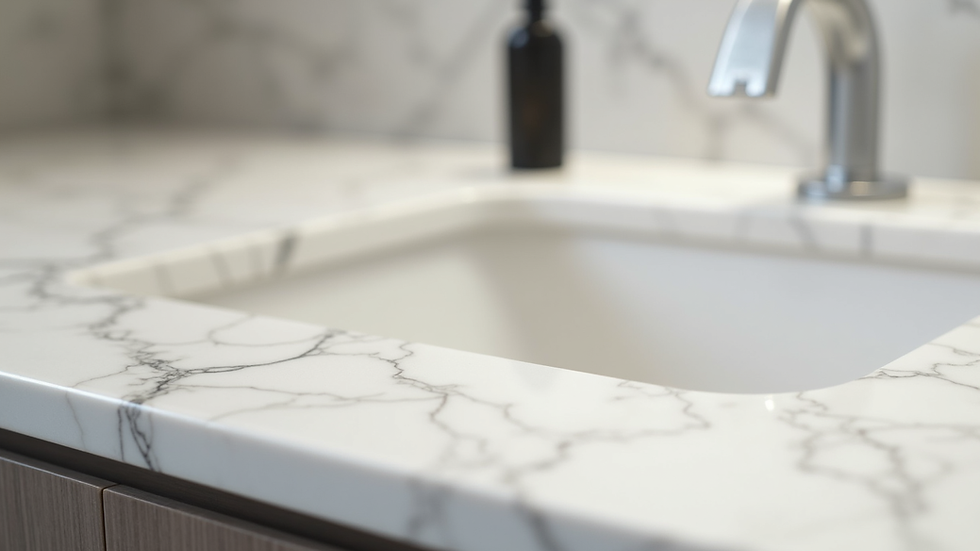
Polished marble countertop showcasing natural veining and texture.
Cost Comparison: Infinity Stone Quartz vs. Marble
Cost differences stem from origin, production, and lifecycle. Marble, a natural resource, incurs high extraction and processing costs, especially premium varieties like Carrara or Calacatta.
Infinity Stone Quartz is more cost-effective: its engineered production enables scalable, consistent output at lower per-unit costs. Its low-maintenance nature (no regular sealing) cuts long-term expenses, making it a wise investment. For wholesalers, its predictable pricing and supply stability enhance inventory value.
Durability & Maintenance: Infinity Stone Quartz vs. Marble
Practicality is key, and Infinity Stone Quartz outperforms marble in high-usage scenarios. It resists chipping, staining, and acid damage, requiring only mild soap-and-water cleaning—ideal for commercial spaces and residential kitchens/bathrooms.
Marble, though stunning, needs meticulous care: regular sealing (6–12 months), prompt acid spill cleanup, and scratch protection. Its fragility limits high-traffic use but suits decorative elements like fireplace surrounds.

Modern kitchen featuring durable quartz countertop with sleek cabinetry.
Sustainability: Infinity Stone Quartz’s Eco-Edge Over Marble
Sustainability is a top priority, and Infinity Stone Quartz outshines marble here. Marble quarrying disrupts ecosystems, consumes energy, and depletes resources.
Infinity Stone Quartz uses eco-friendly practices: recycled material, resins, and low-emission manufacturing. Its durability extends lifespan, reducing replacements. For partners, this sustainable solution aligns with global trends and client demands.
Strategic Recommendations: Choosing Between Infinity Stone Quartz & Marble
Key factors for wholesalers advising clients:
- Usage: Choose Infinity Stone Quartz for high-traffic spaces; marble suits low-traffic decor.
- Aesthetics: Marble offers organic veining; Infinity Stone Quartz provides consistent, customizable patterns.
- Budget: Infinity Stone Quartz delivers better long-term value; marble fits luxury budgets.
- Sustainability: Infinity Stone Quartz is the eco-friendlier option.
- Customization: Infinity Stone Quartz supports bespoke colors/sizes for tailored projects.
Conclusion
Choosing between Infinity Stone Quartz and marble balances aesthetics, function, cost, and sustainability. Marble offers natural luxury but needs upkeep; Infinity Stone Quartz delivers durability, consistency, and eco-friendliness. For wholesalers, it strengthens portfolios and meets demand for high-performance sustainable materials.
Elevate your offerings with Infinity Stone Quartz—where quality, flexibility, and sustainability converge.